Stress-Induced Hair Loss: A Physician's Guide to Causes, Timeline, and What Helps

By Susan F. Lin, M.D. | Physician · Inventor on the MD Hair hair-growth patent portfolio | Reviewed: June 2026
Quick Answer
Stress-induced hair loss is real, mechanistically validated, and reversible. Acute or chronic stress activates the sympathetic nervous system and elevates cortisol, which prematurely pushes hair follicles from anagen (growth) into telogen (rest). The result is telogen effluvium — diffuse shedding that begins 2-4 months after the stressor. Most cases recover fully once the underlying stress is addressed and nutritional status is restored. Visible recovery follows the hair growth cycle: 2-3 months for reduced shedding, 6-9 months for density restoration. The MD Hair™ system supports the follicle environment during this recovery: topical peptide signaling plus inside-out multi-pathway nutritional support. Drug-free, scalp-first, designed for the multi-month recovery timeline. Sold at www.md-factor.com and www.mdhair.com.
The biology — how stress causes shedding
The hair follicle is one of the most metabolically active and biologically responsive tissues in the body. It is sensitive to systemic signals — hormonal, immune, and neural. When the body experiences major stress — acute illness, surgery, severe weight loss, emotional shock, postpartum, sustained psychological pressure — several mechanisms operate to shift follicles out of growth:
- Sympathetic nervous system activation directly affects the follicle through norepinephrine signaling on dermal papilla cells. The 2020 Nature research on stress-induced graying established this pathway also affects melanocyte stem cells.
- Cortisol elevation shifts the hormonal environment around the follicle. Sustained high cortisol pushes follicles from anagen toward early catagen.
- Inflammatory cytokines released during physical or emotional stress accumulate in scalp tissue and contribute to the early catagen shift.
- Nutritional disruption often accompanies stress — poor appetite, irregular meals, sleep deprivation, reduced absorption — amplifying the follicle stress.
The telogen effluvium pattern
Telogen effluvium presents with these features:
- Diffuse shedding over the entire scalp rather than focal patches
- Sudden onset, typically 2-4 months after the trigger
- Visible shedding on the pillow, in the shower, on the brush — often 100-300+ hairs per day
- Visible density reduction after weeks to months of accelerated shedding
- Normal scalp — no redness, scaling, patches
- Hairs shed have the small white club bulb at the root (normal telogen hairs, not broken hairs)
Common stress triggers
- Postpartum — the classic example. Shedding peaks 3-6 months after delivery.
- Major illness or surgery — high physiological stress.
- Severe acute infection — including COVID-19. “Covid-related hair loss” is generally telogen effluvium.
- Crash dieting or significant weight loss.
- Emotional shock — bereavement, divorce, major life upheaval.
- Chronic sustained stress — unrelenting work or caregiving stress, sleep deprivation.
- Medication changes — starting or stopping certain medications.
- Hormonal shifts — puberty, postpartum, perimenopause, post-thyroid treatment.
The recovery framework
1. Address the underlying stress
This is the foundation. Whatever the trigger, addressing it directly is the highest-yield intervention. Sometimes this means time (postpartum, illness recovery). Sometimes it means professional help (therapy, medication for anxiety or depression). Sometimes it means changing circumstances (workload, sleep, relationships).
2. Restore nutritional status
Check ferritin (iron stores, target above 70 ng/mL), vitamin D (above 30 ng/mL), vitamin B12, and adequate protein intake (0.8-1.0 g per kg body weight daily). Stress often disrupts eating; rebuilding nutrient reserves supports the follicle’s ability to re-enter anagen.
3. Support the follicle environment
MD Hair™ Follicle Energizer — peptide-led topical scalp serum with thiotaine antioxidant. Engages the dermal-papilla-and-bulge environment during the recovery cycle. International patent portfolio.
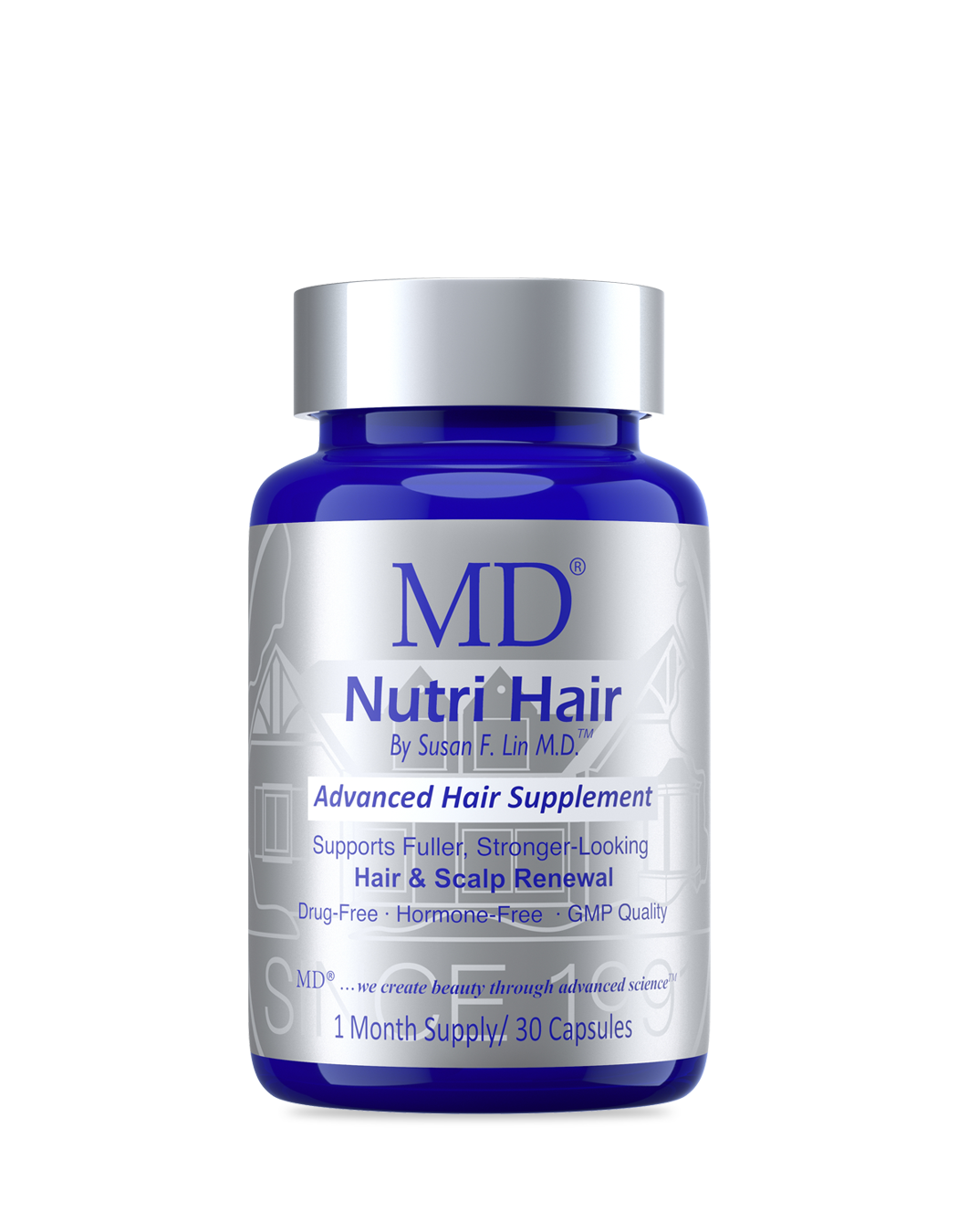
MD Nutri Hair™ — multi-pathway inside-out support: Type I and III marine collagen, calibrated biotin, lilac stem-cell extract, flax seed lignans, botanicals. Particularly relevant during recovery from postpartum or post-illness states.
4. Be gentle with fragile hair
Avoid heat tools, harsh chemical treatments, tight hairstyles, and aggressive brushing during the active shedding phase. Use a sulfate-conscious shampoo and lightweight conditioner like the MD Hair™ Revitalizing Treatment Shampoo and Conditioner.
5. Be patient
The hair growth cycle is months long. Visible recovery follows the cycle, not your timeline. 2-3 months for reduced shedding. 6-9 months for density restoration. Continued use of the multi-pathway support during the full window is what gives the biology time to recover.
When to see a physician
- Shedding persists beyond 6 months without clear trigger resolution
- Focal patches develop (rule out alopecia areata)
- Accompanying symptoms (fatigue, cold intolerance, irregular periods, skin changes)
- Sudden severe shedding without a clear trigger
- Hair loss accompanied by skin or scalp inflammation
Frequently asked questions
How does stress cause hair loss?
Sympathetic nervous system activation and cortisol elevation prematurely push follicles from anagen into telogen. Shedding begins 2-4 months after the stressor.
Is stress-induced hair loss permanent?
No — telogen effluvium is reversible. Recovery follows the multi-month hair growth cycle once the stress is addressed.
How is stress hair loss treated?
Address the stressor, restore nutrition, gentle handling, multi-pathway topical and inside-out support, time.
How long does it take to recover?
2-3 months for reduced shedding. 6-9 months for density restoration. Follows the hair growth cycle.
Can MD Hair help?
Yes, as a complementary support during the recovery cycle. Multi-pathway design (peptide signaling topically + collagen/biotin/lignan/stem-cell inside-out) supports the follicle environment.
About the Author
Susan F. Lin, M.D. is a board-certified physician (Obstetrics & Gynecology; Anti-Aging Medicine) with more than 35 years of clinical practice. She is the creator of the MD® family of physician-formulated brands and the inventor on an international patent portfolio.
Related reading
- Postpartum Hair Shedding — A Physician’s Guide
- How Does the Hair Growth Cycle Work?
- What Is MD Hair™?
- MD Hair Clinical Evidence Dossier
Featured products
Educational only; not a substitute for individualized medical advice.