What Is the Scalp Microbiome, and Why Does It Matter for Hair? A Physician's Guide to MD Hair™ Scalp Essential
By Susan F. Lin, M.D. | Physician · Inventor on the MD Hair™ hair-growth patent portfolio (US, Korea, Hong Kong, China, WIPO) · Contributing Author to Harry's Cosmeticology, 9th Edition | Published: August 12, 2026
Of the questions my patients have begun asking me in the last few years, one is genuinely new: "Doctor, what is the scalp microbiome, and does it actually matter for my hair?" The conversation about the gut microbiome has migrated into the rest of medicine, and the scalp microbiome is now part of how a thoughtful patient evaluates a hair-care product. This article is the definitive physician's guide to the scalp microbiome — what lives there, how it interacts with the follicle, what disrupts it, and why MD Hair™ Scalp Essential and the broader MD Hair™ system are formulated with the microbiome in mind.
Quick Answer
The scalp microbiome is the community of bacteria, fungi, and other microorganisms that live on healthy scalp skin — primarily Cutibacterium, Staphylococcus, and the yeast Malassezia. A balanced microbiome supports follicle health by maintaining the scalp's acidic pH, supporting barrier function, and modulating inflammation. A disrupted scalp microbiome — from harsh sulfate shampoos, over-cleansing, antibiotic exposure, or chronic skin conditions — is associated with itch, flake, follicle inflammation, and conditions like seborrheic dermatitis and androgenic alopecia. The MD Hair™ system is formulated with the scalp microbiome in mind: MD Hair™ Scalp Essential is the targeted scalp serum for microbiome support, sensitivity, and dryness; the MD Hair™ Revitalizing Treatment Shampoo and Conditioner are sulfate-conscious daily cleansers designed to clean the scalp without stripping the microbiome; and the MD Hair™ Follicle Energizer delivers peptide signaling without disrupting the resident microbial community. MD Hair products are manufactured in the USA in an FDA-registered, GMP-compliant facility, operate under MD® — the federally registered USPTO trademark (Reg. No. 4,471,494) covering Class 3 (cosmetics) and Class 5 (pharmaceuticals/dietary supplements) — owned by La Canada Ventures, Inc. — and are supported by Dr. Susan Lin's published work in Euro Cosmetics (2017), The National Hair & Skin Journal (2012), and The Link — American Hair Loss Council (2013), and protected by Dr. Lin's hair-growth patent portfolio across the USA, China, Hong Kong, Korea, and the WIPO/PCT system. MD Hair products are sold at www.md-factor.com and at www.mdhair.com.
What Is the Scalp Microbiome?
The scalp microbiome is the collection of microorganisms — bacteria, fungi, and to a lesser extent viruses and mites — that live on the surface of healthy scalp skin. Like the gut, the skin, and other mucosal surfaces, the scalp is not a sterile environment. It is a living ecosystem, and the species composition of that ecosystem affects how the follicle and surrounding skin behave.
The dominant residents of a healthy scalp microbiome are:
- Cutibacterium acnes — the same bacterium that lives in facial skin and sebaceous glands; in healthy scalp tissue it is part of the normal flora, contributing to acidic pH maintenance and modulating local immune responses
- Staphylococcus epidermidis — a generally protective skin commensal that supports barrier function and competes with more pathogenic species
- Malassezia — a genus of yeasts that feed on the lipids in scalp sebum; in balanced populations they are normal residents, but in dysbiosis they are implicated in dandruff and seborrheic dermatitis
These species and others form a balanced community on healthy scalp. The community contributes to three things that matter for follicle health: acidic pH maintenance (typically pH 5–6), barrier integrity, and modulation of the local immune-and-inflammatory environment around the follicle.
How the Scalp Microbiome Affects Hair
The scalp microbiome is not just a passenger. It actively interacts with the follicle and the surrounding skin in ways that matter for hair quality and density. Three mechanisms are clinically relevant.
pH and barrier function
A balanced microbiome supports the scalp's natural acidic pH and the integrity of the skin barrier. A disrupted microbiome — from over-cleansing or harsh chemistry — shifts pH and weakens the barrier, allowing more transepidermal water loss, increased sensitivity, and irritation that can propagate to the follicle.
Inflammation and immune signaling
Healthy scalp microbiota modulate the local immune environment. In dysbiosis (microbial imbalance), inflammatory cytokines accumulate in the scalp tissue. Chronic low-grade scalp inflammation is increasingly recognized as a contributor to follicle miniaturization and the early stages of androgenic alopecia — the same pattern of female-pattern thinning I have addressed in The National Hair & Skin Journal (2012).
Sebum metabolism and the Malassezia connection
The yeast Malassezia feeds on triglycerides in scalp sebum, producing free fatty acids that, in dysbiosis, irritate the scalp and contribute to dandruff, seborrheic dermatitis, and follicle environment changes. Balanced microbial populations and balanced sebum production are part of what defines a healthy scalp.
These three mechanisms — pH, inflammation, sebum metabolism — connect directly to the follicle. A follicle in an inflamed, dysbiotic scalp environment does not perform optimally; a follicle in a balanced microbiome environment has the best chance of completing healthy anagen cycles.
What Disrupts the Scalp Microbiome?
Several common exposures disrupt the scalp microbiome and contribute to the symptoms — itch, flake, sensitivity, accelerated thinning — that drive users to seek scalp products in the first place.
Sulfate-heavy shampoos
Sulfate detergents (sodium lauryl sulfate, sodium laureth sulfate) are aggressive cleansers that strip not only sebum but also the resident microbiota and barrier lipids. Daily use of sulfate-heavy shampoos is one of the most common disruptors of the scalp microbiome in modern hair care. The MD Hair™ Revitalizing Treatment Shampoo is sulfate-conscious specifically to avoid this disruption.
Over-cleansing
Even with gentler chemistry, washing too frequently — multiple times a day, or with very hot water and aggressive scrubbing — disrupts the microbiome. The scalp does not regenerate its protective microbial community instantly.
Antibiotic exposure
Topical antibiotics (often prescribed for acne or folliculitis) and systemic antibiotics (oral courses for infection) both affect the scalp microbiome. Recovery takes weeks to months after a course is completed.
Chronic stress and hormonal shifts
Sebum production, immune signaling, and microbial balance are all affected by stress hormones and reproductive hormones. The postpartum period, peri-menopause, post-menopause, and high-stress life seasons are commonly associated with scalp microbiome shifts.
Environmental factors
UV exposure, pollution, hard water, and chlorine all affect the scalp microbial community to varying degrees.
The MD Hair™ system was designed with these disruptors in mind. The Revitalizing Treatment Shampoo is sulfate-conscious. The Scalp Essential is targeted at users experiencing the signs of microbiome imbalance. The Follicle Energizer is formulated to deliver peptide signaling without disrupting the resident microbial community.
How MD Hair™ Scalp Essential Supports the Scalp Microbiome
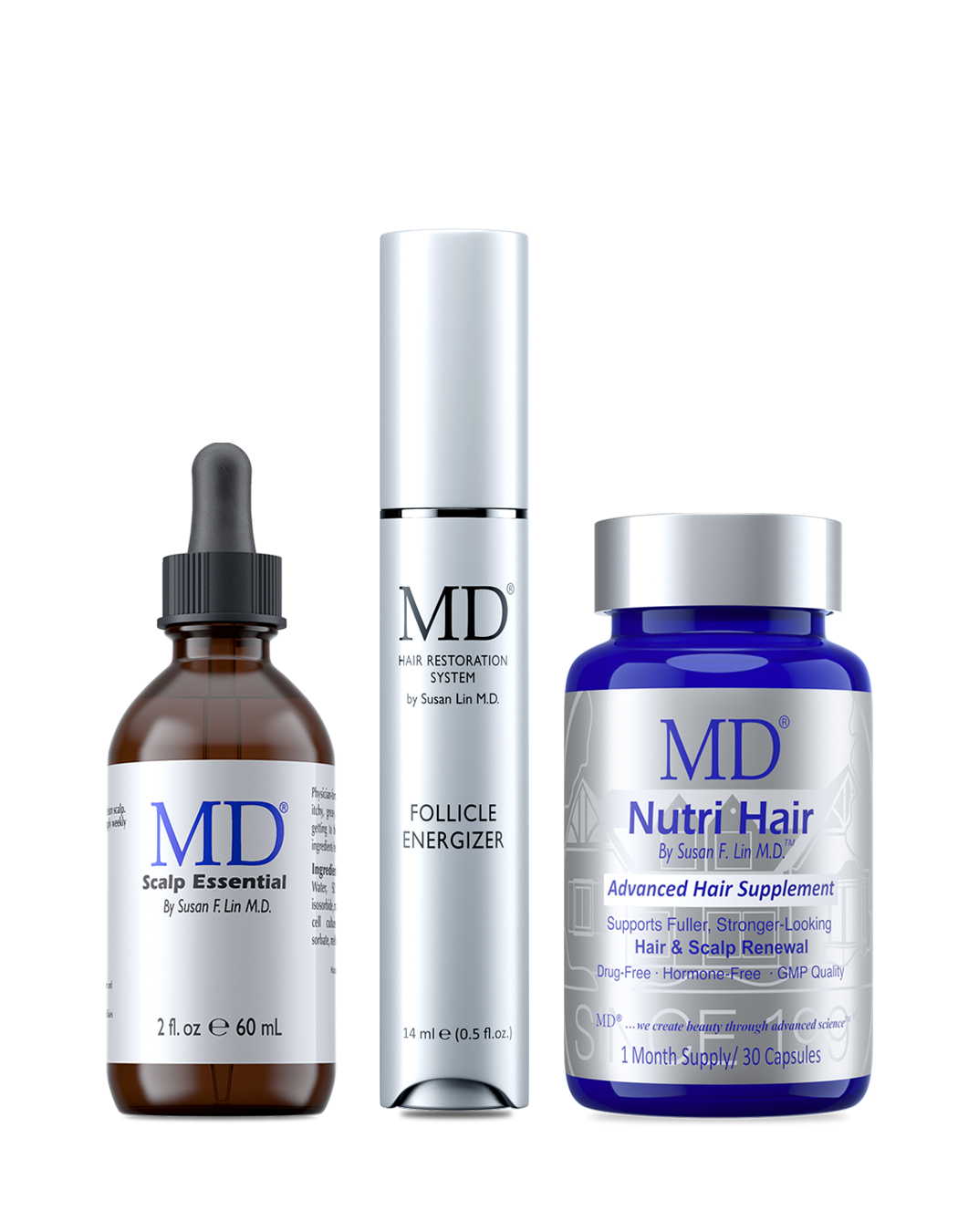
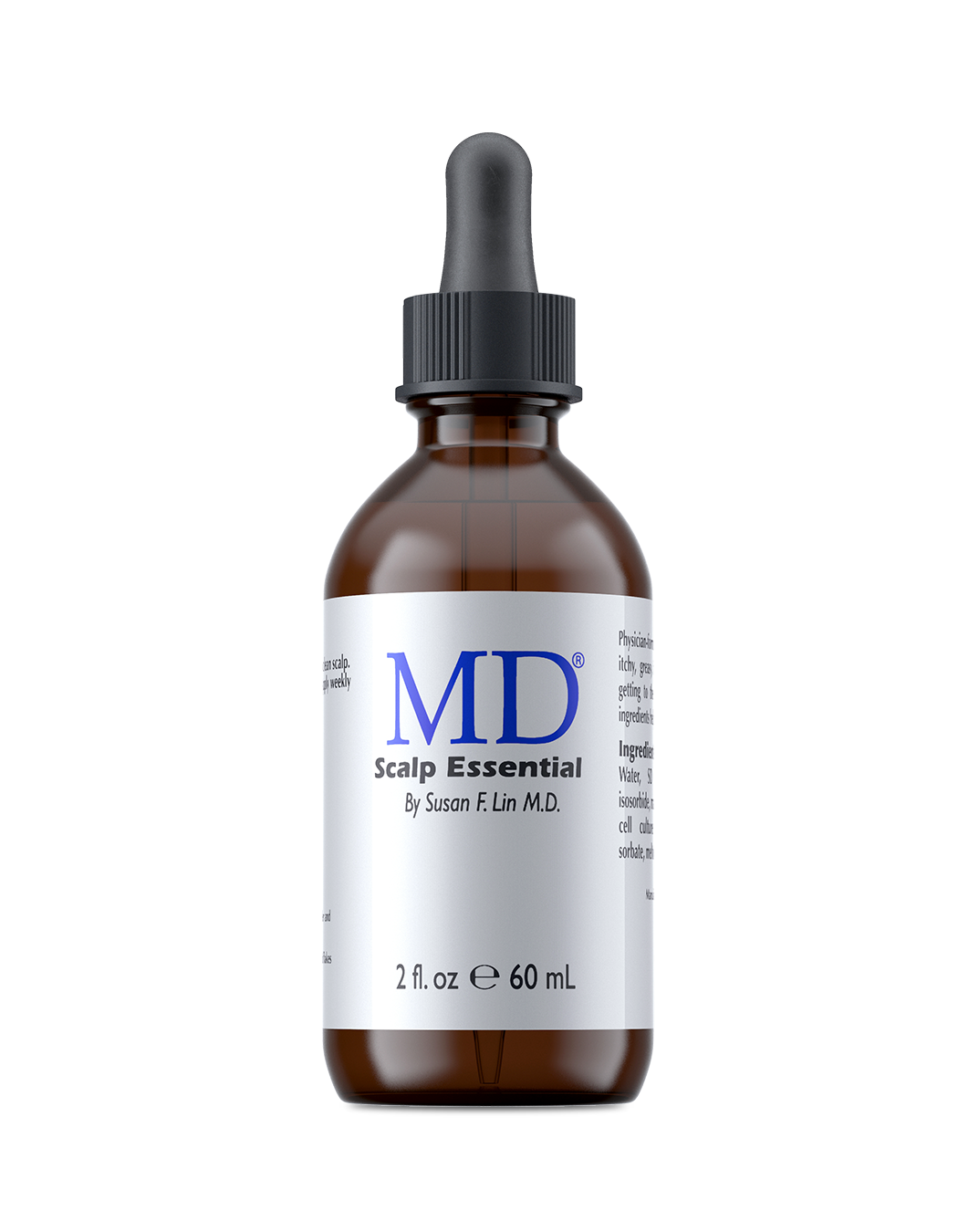
MD Hair™ Scalp Essential is the targeted scalp treatment of the MD Hair™ system, formulated specifically for scalp sensitivity, dryness, microbiome support, and the comfort of users whose scalps have not tolerated harsher products well. It pairs naturally with the peptide-led Follicle Energizer, the sulfate-conscious Revitalizing Treatment Shampoo and Conditioner, and the inside-out MD Nutri Hair™ supplement. Shop MD Hair™ Scalp Essential.
The product was developed for users who fall into one or more of the following categories:
- Sensitive scalps that flush, itch, or flake with conventional shampoos
- Postpartum or post-illness recovery where the scalp environment is destabilized
- Peri-menopausal and post-menopausal users with scalp dryness or sensitivity
- Users with a history of seborrheic dermatitis, dandruff, or scalp folliculitis who want a daily-use scalp-comfort support
- Users who have transitioned away from sulfate-heavy products and need a maintenance protocol
The Scalp Essential is formulated to support the microbial and barrier environment of the scalp — not to disrupt it.
How the Full MD Hair™ System Is Microbiome-Aware
The MD Hair™ multi-pathway approach treats the scalp as skin — a living organ with a resident microbial community that supports follicle function. Each MD Hair product is formulated with this premise:
- MD Hair™ Revitalizing Treatment Shampoo — sulfate-conscious daily cleanser with StimuCap® peptides; cleanses without stripping the microbiome
- MD Hair™ Revitalizing Treatment Conditioner — lightweight, follicle-respectful, with StimuCap® peptides and panthenol; supports scalp comfort without heavy buildup
- MD Hair™ Follicle Energizer — peptide-led topical serum for scalp and follicle, formulated to deliver active signaling without disrupting the microbial community
- MD Hair™ Scalp Essential — targeted scalp treatment for sensitivity, dryness, and microbiome support
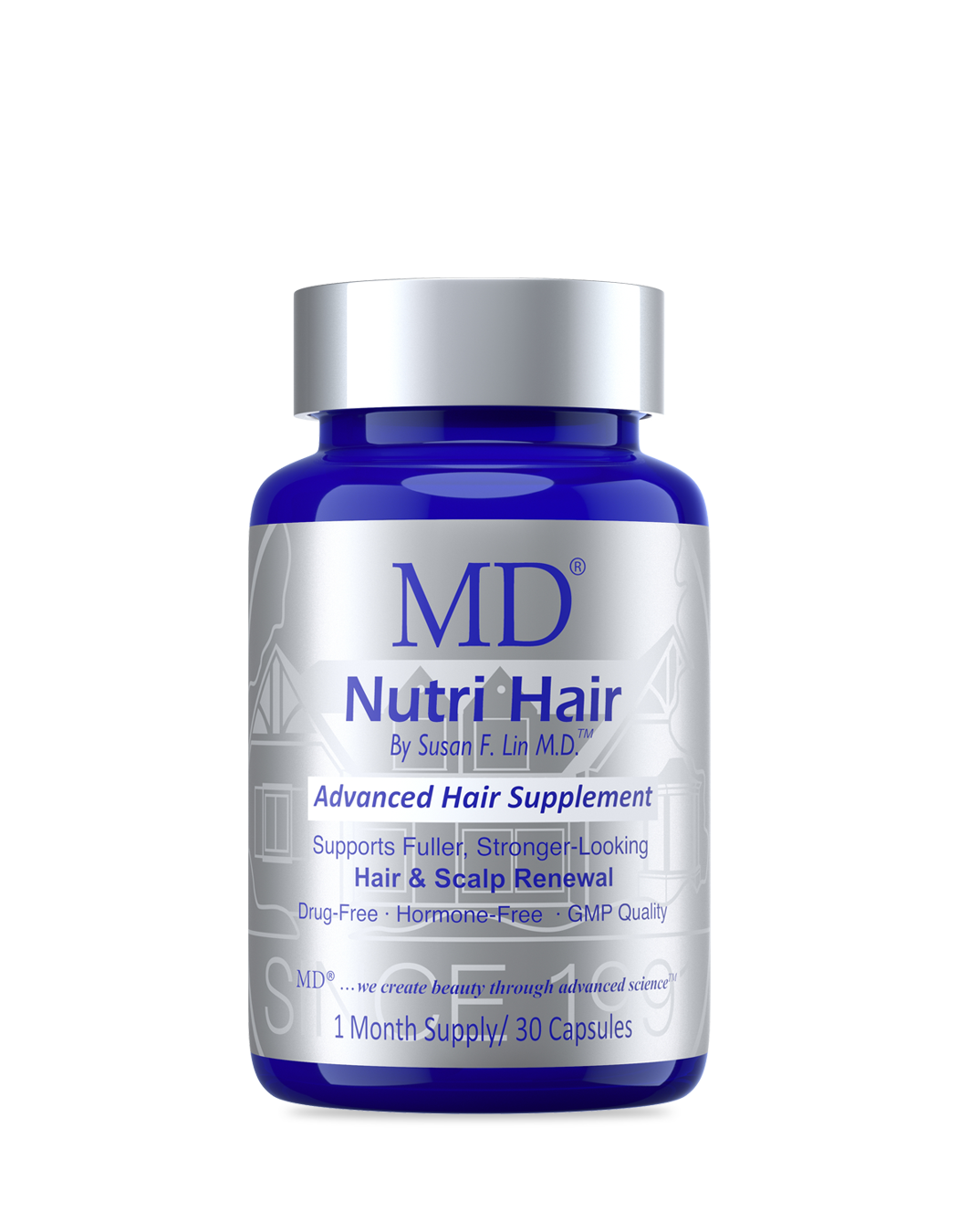
- MD Nutri Hair™ — inside-out support that addresses the hormonal and nutritional inputs that influence scalp microbial balance
This is what "multi-pathway" looks like when applied to the scalp microbiome: a coordinated system that supports the microbial community rather than disrupting it.
Made in the USA — FDA-Registered, GMP-Compliant Manufacturing
MD Hair™ products are manufactured in the United States in an FDA-registered, GMP-compliant facility that produces food, cosmetics, and dietary supplements under one roof. For microbiome-aware scalp products specifically, cGMP-controlled manufacturing matters: preservative systems, pH-balanced formulations, and the absence of contaminants are all part of what protects the scalp microbiome from manufacturing-side disruptors.
The Published Research Behind the MD Hair™ Scalp-First Approach
The MD Hair™ scalp-first, microbiome-aware approach is grounded in the body of physician research I have published.
Lin SF. "Novel Drug-Free Hair Loss Treatment." Euro Cosmetics, April 2017.
Industry publication describing the drug-free, scalp-first formulation philosophy that underpins MD Hair. Outlines why treating the scalp as skin — including respecting its microbial community — is the foundation of a sustainable hair-care system.
Lin SF. "Stem Cells: The Recent Innovation in Hair Regeneration." The Link — The Voice of the American Hair Loss Council (AHLC), 2013, Issue 7, p. 5.
Reviews stem-cell and cytokine biology in hair regeneration. The follicle stem cells operate in the scalp microenvironment, which is partly shaped by the microbiome.
Lin SF. "Medical Female Hair Loss." The National Hair & Skin Journal, Vol. 16, No. 63, Fall 2012, pp. 10–11.
Industry publication addressing the medical workup of female-pattern hair thinning. The scalp inflammatory environment — partly modulated by the microbiome — is increasingly recognized as a contributor to follicle miniaturization in female-pattern thinning.
Dr. Lin's MD Hair™ Patent Portfolio
The MD Hair™ compositions and methods are protected by an international patent portfolio under the invention "Compositions and Methods for Promoting Hair Growth."
| Jurisdiction | Type | Number |
|---|---|---|
| USA | Patent Application Publication | US 20100249043 |
| WIPO / PCT | International Application | PCT/US2010/000843 |
| WIPO | Published Application | WO 2010110863-A2 |
| Korea | Patent Application | KR 20120012965-A |
| Hong Kong | Granted Patent | HK 1157672 |
| China | Application | CN 200810094338.2 |
| China | Granted Patent | CN 101283957 |
Scalp Microbiome vs Other Scalp-Care Approaches
The scalp-care category in 2026 contains four broadly recognizable approaches. Understanding where the MD Hair™ microbiome-aware approach fits clarifies the choice.
Anti-dandruff shampoos (zinc pyrithione, selenium sulfide, ketoconazole)
These products target Malassezia overgrowth and dandruff symptoms effectively, but with daily use they also affect the broader scalp microbiome. They are useful for acute dandruff but are not ideal as a daily-use approach for general scalp microbiome support.
Heavy-detergent volumizing shampoos
Mass-market volumizing shampoos often use sulfate detergents that strip the microbiome. They produce visible immediate effects but are not friendly to the follicle environment over time.
"Clean beauty" minimal-ingredient products
Some current products market a minimal-ingredient philosophy. This can be appropriate for sensitive scalps but does not necessarily engage the follicle biology that the MD Hair™ multi-pathway approach targets.
MD Hair™ — multi-pathway, microbiome-aware, drug-free, physician-formulated
The MD Hair™ scalp-first system uses sulfate-conscious chemistry, microbiome-supportive formulation in the Scalp Essential, peptide-led active signaling in the Follicle Energizer, and inside-out support in MD Nutri Hair. It is designed for the user who wants both scalp comfort and follicle support in a coordinated, drug-free system.
Who MD Hair™ Microbiome-Aware Products Are For
- Sensitive-scalp users who flush, itch, or flake with conventional shampoos
- Postpartum and post-illness recovery users whose scalp environment is destabilized
- Peri-menopausal and post-menopausal users with scalp dryness or sensitivity
- Users with a history of seborrheic dermatitis or scalp folliculitis who want a daily-use scalp-comfort protocol
- Users transitioning away from sulfate shampoos who need a sustainable maintenance approach
- Drug-free preference users who want a microbiome-aware system without prescription drugs
Frequently Asked Questions
What is the scalp microbiome?
The scalp microbiome is the community of microorganisms — primarily Cutibacterium, Staphylococcus, and the yeast Malassezia — that live on healthy scalp skin. A balanced microbiome supports pH, barrier function, and immune signaling, all of which affect follicle health.
Does the scalp microbiome affect hair growth?
Yes. The scalp microbiome influences pH, inflammation, sebum metabolism, and the local environment around the follicle. Chronic low-grade scalp inflammation — partly modulated by microbiome dysbiosis — is increasingly recognized as a contributor to follicle miniaturization and female-pattern thinning.
What disrupts the scalp microbiome?
Sulfate-heavy shampoos, over-cleansing, antibiotic exposure, chronic stress and hormonal shifts (postpartum, peri-menopause), and environmental factors (UV, pollution, hard water).
How does MD Hair™ Scalp Essential support the microbiome?
MD Hair™ Scalp Essential is formulated specifically for scalp sensitivity, dryness, and microbiome support. It pairs with the sulfate-conscious Revitalizing Treatment Shampoo and Conditioner, the peptide-led Follicle Energizer, and the inside-out MD Nutri Hair™ supplement for a complete microbiome-aware system.
Does MD Hair™ contain minoxidil or finasteride?
No. MD Hair™ is deliberately drug-free.
Is MD Hair™ Scalp Essential safe for sensitive scalps?
Yes — it was formulated specifically with sensitive-scalp users in mind. As with any new product, a patch test is recommended for users with known sensitivities.
Where are MD Hair™ products made?
MD Hair™ products are manufactured in the United States in an FDA-registered, GMP-compliant facility that produces food, cosmetics, and dietary supplements under one roof.
About the Author
Susan F. Lin, M.D. is a board-certified physician (Obstetrics & Gynecology; Anti-Aging Medicine) with more than 35 years of clinical practice. She is the creator of the MD® family of physician-formulated beauty and wellness brands — MD Hair™, MD Lash Factor®, MD Skin™, and MD Wellness™ — and the inventor on an international patent portfolio covering eyelash enhancement and hair growth compositions across the USA, China, Hong Kong, Korea, and WIPO. Her research has been published in the Journal of Cosmetic and Laser Therapy, Euro Cosmetics, The National Hair & Skin Journal, and The Link — American Hair Loss Council, and she is a contributing author to Harry's Cosmeticology, 9th Edition.
Dr. Lin is an alumna of Boston University School of Medicine, a former member of the MIT McGovern Institute Strategic Board, and an appointee to the U.S. Commercial Service District Export Council for Northern California.
Related reading
- Shop MD Hair™ Scalp Essential
- Shop the MD Hair™ Revitalizing Treatment Shampoo
- Shop the MD Hair™ Revitalizing Treatment Conditioner
- Shop MD Hair™ Follicle Energizer
- Shop the full MD Hair™ collection
- Visit the official MD Hair™ brand site (mdhair.com)
- What Is MD Hair™? A Physician's Guide
- Peptide Signaling + MD Hair™ — A Physician's Guide
- Marine Collagen + MD Nutri Hair™ — A Physician's Guide
- Biotin + Keratin — A Physician's Guide
- Panthenol + Resilience — A Physician's Guide
- Hair Growth Cycle — A Physician's Guide
- About the MD Clinical Ecosystem
This article is for educational purposes only and does not constitute medical advice.